

Who we are
DFL Energy is an independent energy broker. We do not generate power or sell gas ourselves — we compare offers from licensed suppliers on your behalf, in plain English, against what your utility already charges.
Most people end up on whatever rate their utility defaults to, or whatever a single supplier's sales call offers — not because it's the best deal, but because comparing the alternatives properly takes time nobody has. That comparison is the entire job here.
Independent energy broker
Start with your ZIP code.
In a deregulated market your utility still delivers the power — but you choose who supplies it. We compare what licensed suppliers are offering against the default rate your utility charges, and show you the difference in plain numbers.
Where do you need service?
Rates are set utility by utility, so we start with your ZIP.
Confirm your utility
This is whoever sends your bill today.
Where should we send your rates?
doesn't publish live plan pricing to us yet — a consultant will follow up with real options for your account.
Got it.
A consultant will reach out with options for shortly. No obligation to switch.
Two ways people overpay — and what we do about each.
Suppliers quote you one number
A single supplier has no reason to show you their best price on a first pass. We put your load in front of several at once and let them bid against each other for it.
Your bill holds the leverage
Usage history, rate class, load factor and demand pattern all change what you qualify for. We read those off your actual invoices rather than quoting off a guess.
Renewal timing is the whole game
Contracts that lapse roll onto a variable default rate that is almost never competitive. We track your end date and start shopping while you still have room to negotiate.
Someone to call afterwards
Billing errors, meter changes, adding a site — these land with us, not with a supplier call centre queue.
The default rate moves without warning
Your utility resets its supply rate on a fixed schedule, sometimes twice a year. A fixed-rate plan holds through those resets so a bad quarter does not reach your bill.
Teaser rates are designed to expire
Introductory pricing usually converts to a variable rate after a month or two. We flag what a plan becomes, not just what it opens at.
The fees matter as much as the rate
A low headline rate with a monthly recurring charge often costs more than a higher one without. We show the all-in number so the comparison is real.
Nothing about your service changes
Same wires, same meter, same utility, same outage number. Only the supply line on your bill changes hands.
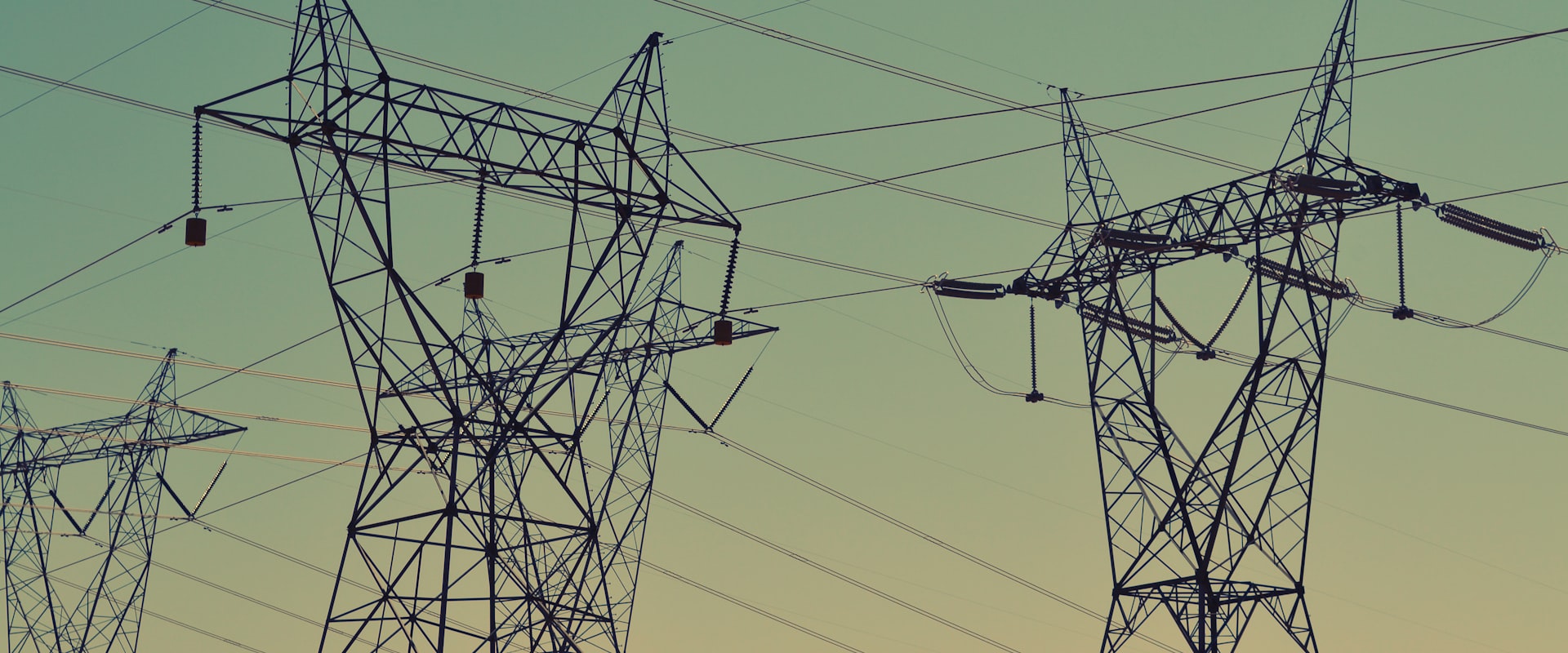
The grid that delivers your power is a monopoly. The energy running through it is not.
The part most people miss
Half your bill isn't up for negotiation. The other half is.
Every energy bill splits in two. Delivery — the poles, wires, pipes and meter reading — is your utility's monopoly, set by the regulator, identical for every customer on the network. Nobody can sell you a cheaper version of it.
Supply is the energy itself, and in a deregulated market that half is open. Switching it changes one line on your bill. Everything else — who fixes an outage, who reads the meter, who you call in a storm — stays exactly where it is.
How it works
Four steps, and we do three of them.
-
01
Send us a bill
One recent invoice per meter is enough. It tells us your utility, rate class, usage profile and contract end date.
-
02
We run the market
We take those numbers to the suppliers licensed in your territory and collect firm, comparable quotes.
-
03
You pick a plan
We lay the offers out side by side with the fees and cancellation terms visible, and explain the trade-offs before anything is signed.
-
04
We watch the clock
We keep monitoring your contract and the market, and come back to you ahead of the renewal window.
Illustrative. It shows how the two rate types behave — the default rate resets on a schedule, a fixed rate does not — rather than any specific quote. Note the first six months: locking in is not always cheaper on day one. The case for it is the resets you avoid later.
Fixed vs. variable
What you are buying is not a rate. It's the absence of surprises.
A utility's default rate is recalculated on a schedule — every six months in most states, monthly in New York. A fixed contract holds one number through all of it.

Where we work
18 markets where you get to choose your supplier.
Energy choice is decided state by state. These are the markets open to competitive supply — each page explains how that state's rules actually work.
- Connecticut Power & gas
- Delaware Power & gas
- District of Columbia Power & gas
- Florida Gas
- Illinois Power & gas
- Maine Power
- Maryland Power & gas
- Massachusetts Power & gas
- New Hampshire Power & gas
- New Jersey Power & gas
- New York Power & gas
- Ohio Power & gas
- Pennsylvania Power & gas
- Rhode Island Power & gas
- Texas Power
- Michigan Power
- California Power
- Virginia Power
- Oregon Power
- Nevada Power
Find out what you are paying above market.
Send one recent bill and we will come back with what your account qualifies for today. No cost, and no obligation to switch.